From solar particles to dancing lights — the science and secrets of the aurora borealis.
The northern lights — aurora borealis — are a natural light display in Earth's upper atmosphere. They appear as shimmering curtains, arcs or spirals of green, purple, pink and white light, usually visible between 65° and 72° latitude. Iceland sits almost perfectly inside this belt.
The aurora is caused by charged particles from the Sun colliding with gases in our atmosphere. When these particles hit oxygen and nitrogen, they release energy as light — creating the glow you see in the sky.
The Sun constantly emits a stream of charged particles called the solar wind. During events like solar flares and coronal mass ejections (CMEs), it fires enormous bursts of plasma toward Earth at millions of kilometres per hour.
Earth's magnetic field normally deflects most of this, but at the poles the field lines converge — funnelling particles down into the atmosphere. That's why Iceland is one of the best places on Earth to see the aurora.
When the Sun's magnetic field points south (negative Bz), it reconnects with Earth's field and opens a "gate" for particles. This is the most important single factor for aurora.
Faster solar wind delivers more energy. Speeds above 500 km/s significantly increase aurora probability.
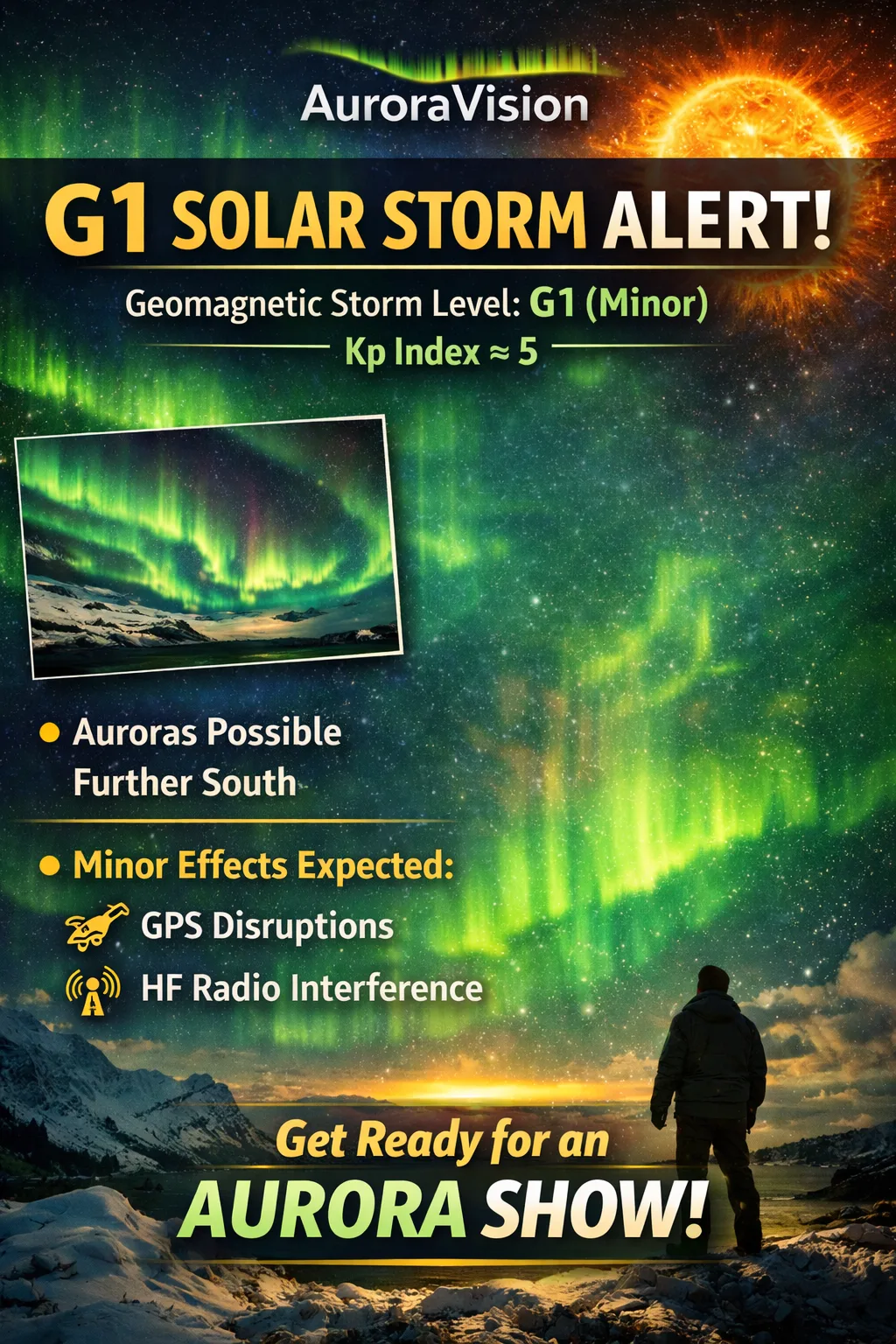
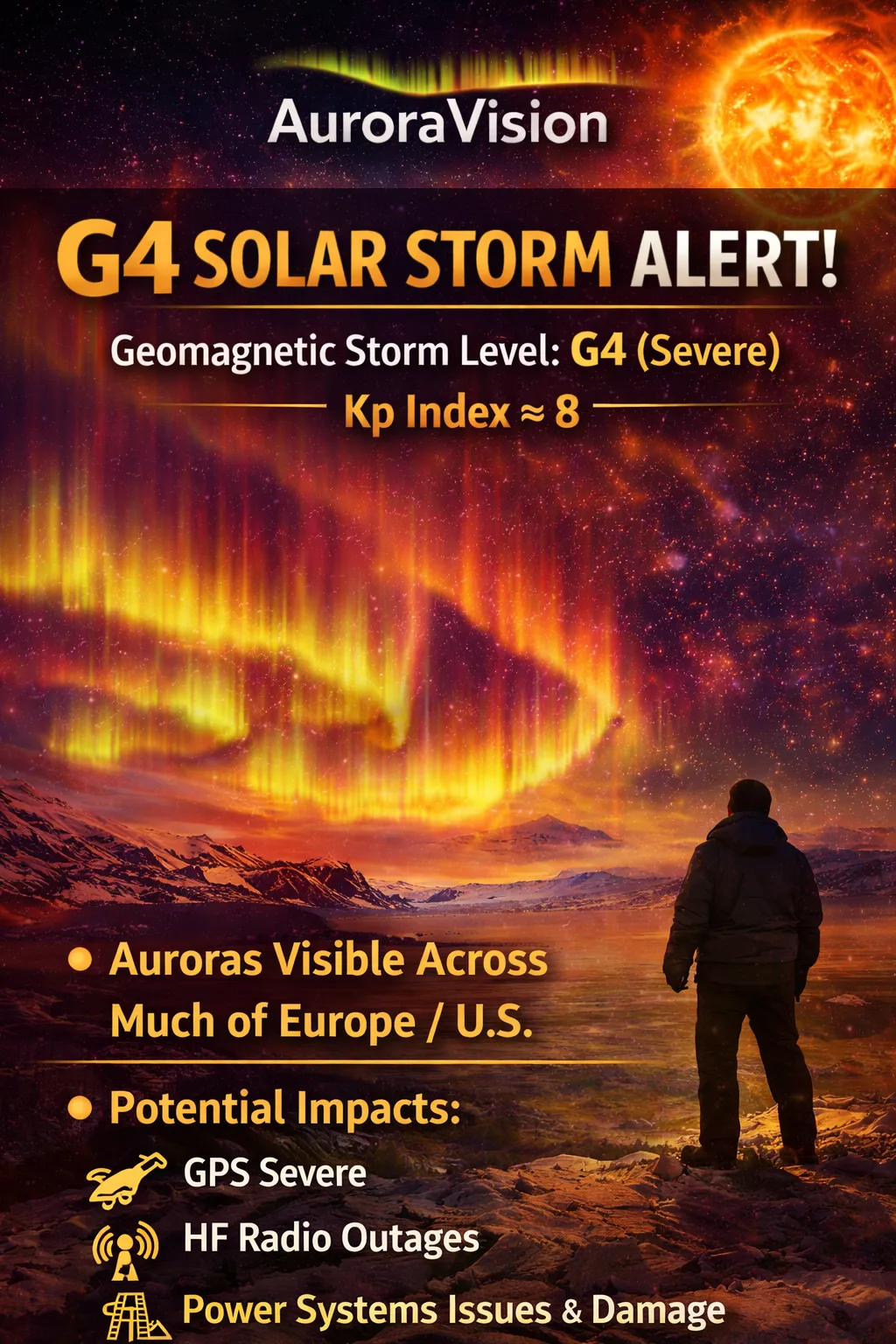
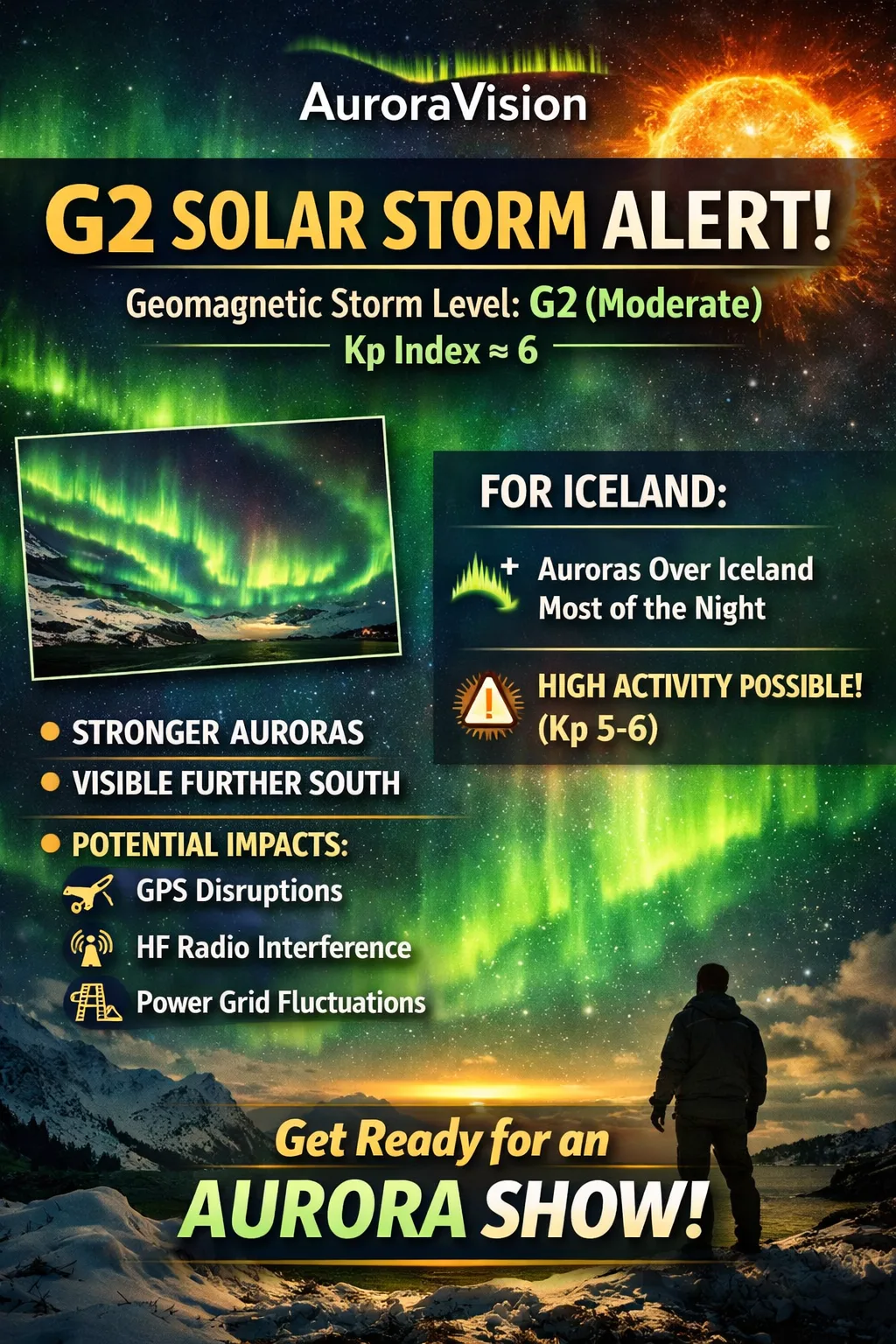
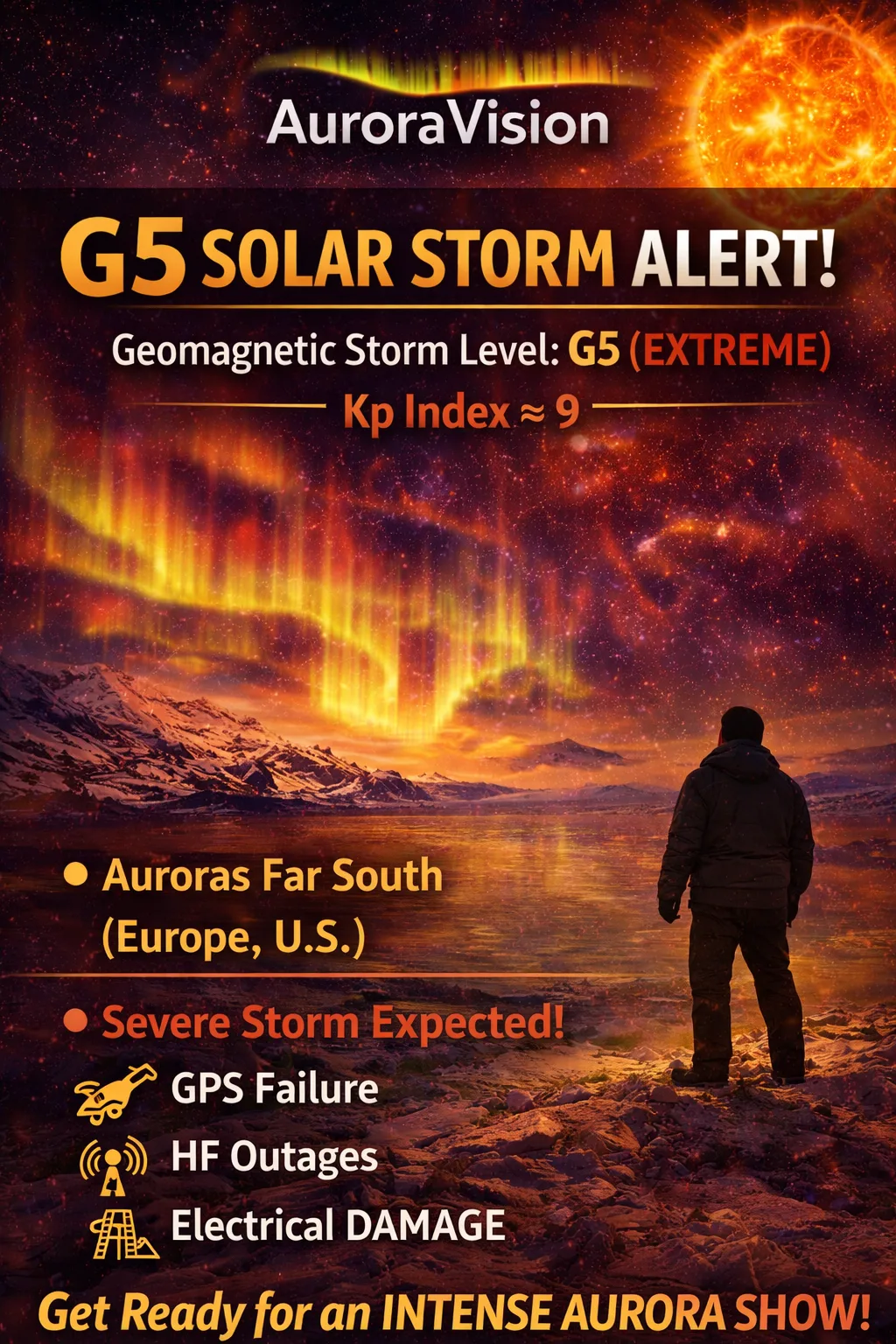
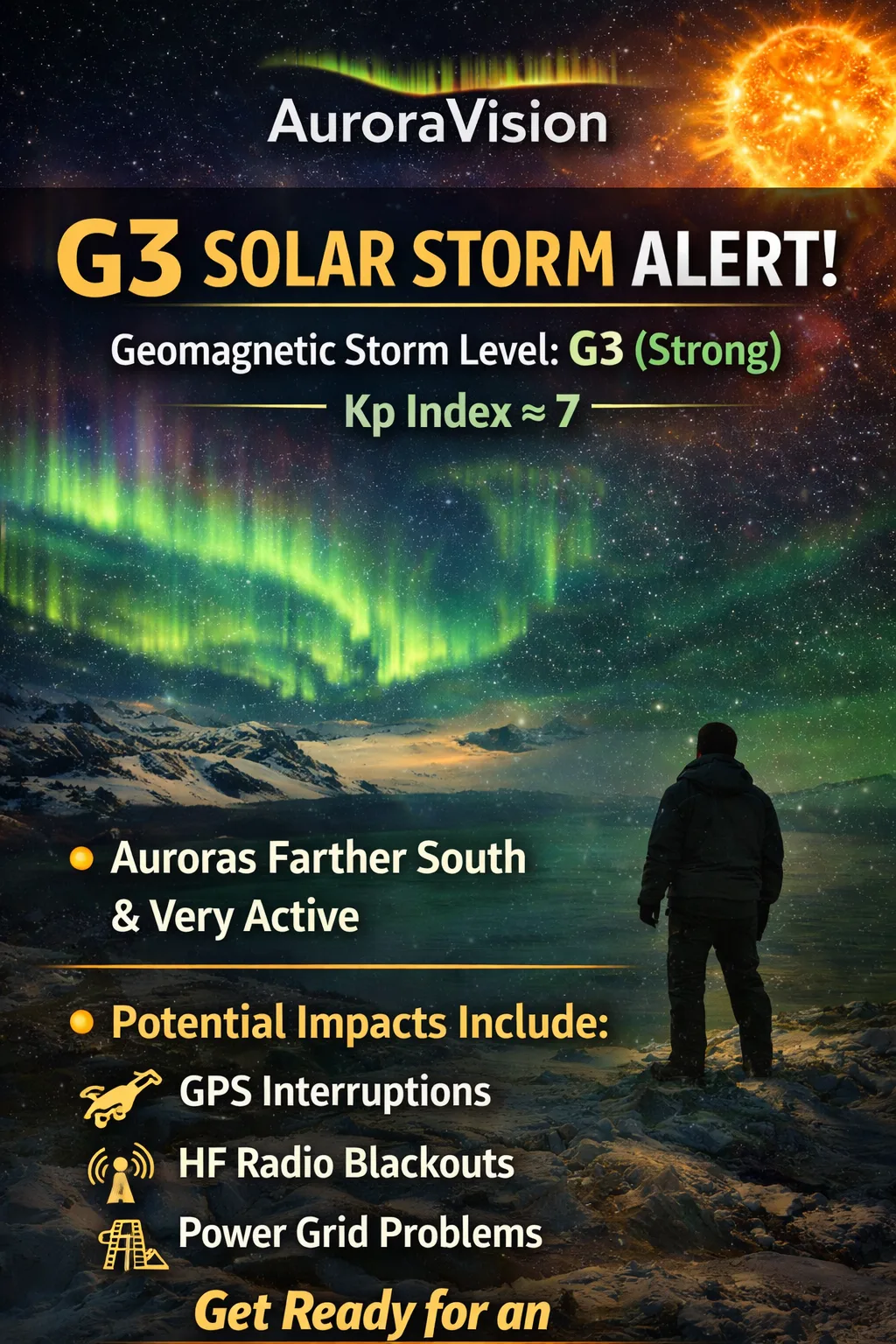
A 0–9 scale measuring global geomagnetic activity. Kp ≥ 3 is good for Iceland. Kp ≥ 5 means strong disturbances visible far south.
The aurora concentrates in a ring-shaped zone called the auroral oval, centred over the magnetic poles. Iceland sits right below this oval most of the time.
Three things need to line up for a good display:
Moon phase also matters — a full moon lights up the sky and reduces contrast. A new moon gives the darkest skies and the best aurora experience.
The Kp index is the most commonly quoted aurora metric. Here's a guide for Iceland:
Aurora possible only at the far north of Iceland (Akureyri, Húsavík). Faint display.
Good aurora across most of Iceland including Reykjavík. Clear skies are essential here.
Strong display, easily photographed, visible even from cities with some light pollution.
Rare and spectacular. Aurora visible across the UK, Germany and northern USA. Red and purple colours appear.
The dancing motion is caused by rapidly changing magnetic field lines in the ionosphere. As the solar wind pressure fluctuates, charged particles follow different paths, creating the swirling, curtain-like motion that makes the aurora so mesmerising.
The most dramatic displays — known as auroral substorms — can fill the whole sky with rapidly shifting light within seconds. These happen when stored magnetic energy in Earth's magnetosphere is suddenly released.
Learn how AuroraVision combines Bz, speed, cloud cover and Kp into a single actionable score.
Read more →Darkness windows, moon phases and peak aurora hours explained.
Read more →Check real-time conditions and the best viewing window for your location right now.
Check now →Download AuroraVision for live aurora alerts.

Expert-guided aurora hunting with instant confirmation