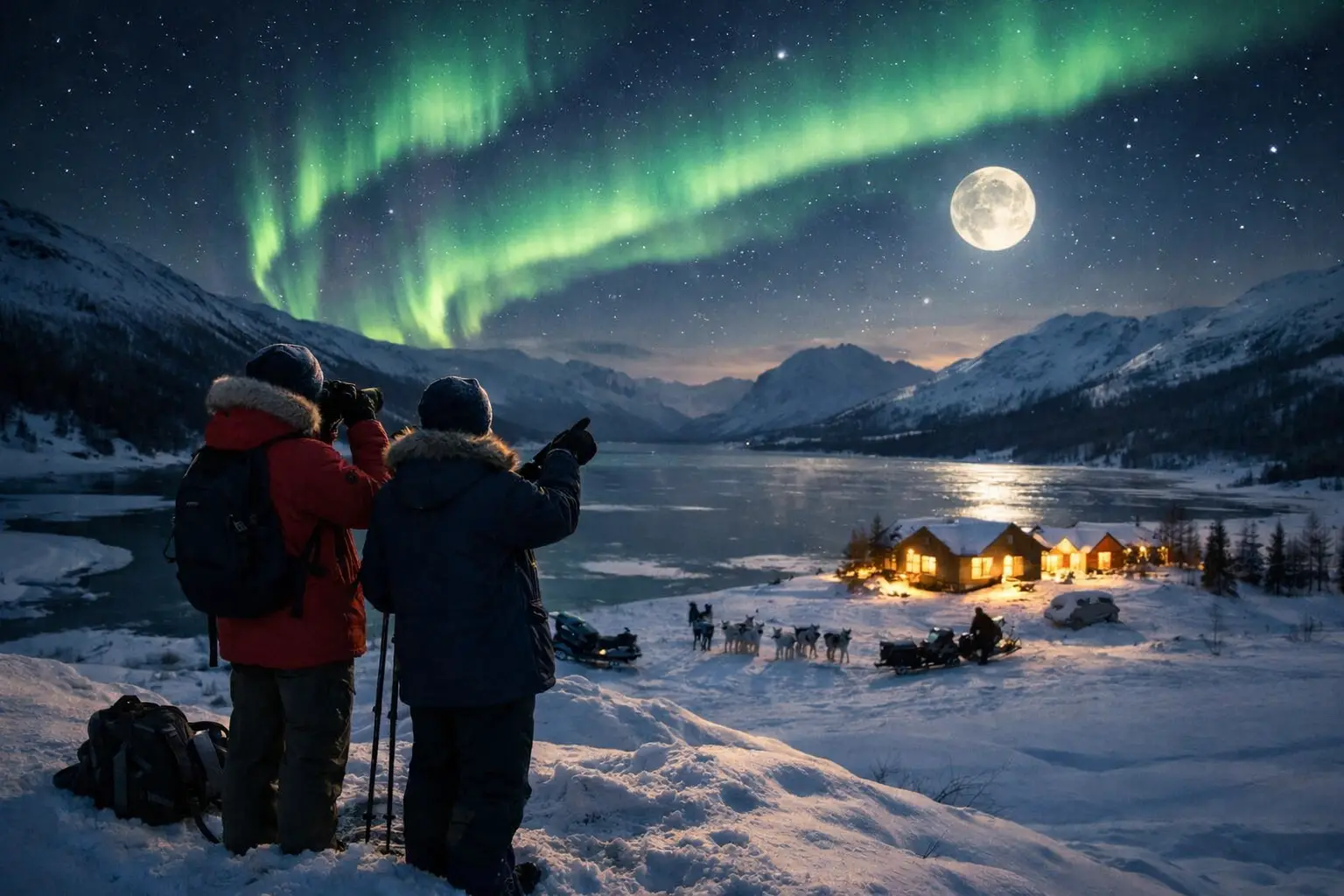
A winter road can be perfectly clear at 5 p.m., disappear under blowing snow at 7 p.m., and open beneath a bright aurora at 10 p.m. Arctic travel rewards people who can adjust their plans without losing the point of the trip. The Northern Lights may be the headline, but daylight, clouds, road conditions, wind, and distance determine whether your evening becomes a memory or a long wait in a parking lot.
The most successful Arctic itineraries leave room for both. Plan the experiences you can enjoy in any weather, then protect several flexible nights for aurora viewing. That approach works whether you are staying in Iceland for a short winter break, driving northern Norway, sleeping in a glass cabin in Finland, or traveling through Alaska or Northern Canada.
Arctic Travel Starts With the Clock
At high latitudes, the calendar changes the shape of every day. In early winter, you may have enough daylight for sightseeing, hiking, and driving between destinations, followed by a long aurora window at night. Near the darkest weeks of the year, daylight can be brief or twilight-like, which changes both driving confidence and your ability to see landscapes clearly.
For most first-time visitors, late September through early April offers the practical balance: dark nights, accessible roads in many regions, and enough daytime for other activities. The best month depends on your priorities. September and October can bring milder temperatures and open landscapes, while February and March often provide longer daylight and reliable snow activities. December and January offer deep darkness and a dramatic winter atmosphere, but they demand more careful route planning.
Do not treat every Arctic destination as interchangeable. Iceland can deliver fast-changing weather and strong winds. Northern Norway combines coastal climate with mountain roads and ferry schedules. Interior Finland and Sweden are often colder and drier, while Greenland, Svalbard, Alaska, and Northern Canada require more logistics and greater respect for remote conditions. Choose a destination based on the full trip you want, not only a hoped-for aurora photo.
Build an Itinerary That Can Move
A rigid nightly aurora plan is usually the first thing Arctic weather breaks. Instead of booking one single viewing opportunity, stay at least three nights in one region when possible. Four or five nights gives you a much better margin for cloud cover, fatigue, delayed flights, and solar activity that arrives earlier or later than expected.
Base yourself somewhere with easy access to darker surroundings, but do not assume the most isolated lodging is automatically best. A remote cabin can be wonderful when the forecast is clear, yet it may mean a difficult late-night drive if clouds settle in. A town with several nearby viewing directions, fuel, food, and reliable winter road access can be the smarter choice for an independent traveler.
Keep each day intentionally lighter than you would on a summer road trip. A full day of glacier walks, snowmobiling, or long-distance driving leaves little energy for standing outside in the cold after midnight. Build in rest time, eat before heading out, and keep your evening route short enough that returning tired feels safe.
If you rent a vehicle, confirm the seasonal equipment and insurance details before arrival. Winter tires, windshield fluid rated for low temperatures, a working ice scraper, and a charged phone are basics, not extras. In places with narrow roads, limited shoulders, or rapidly changing visibility, never stop in the travel lane for a sky photo. Pull over only where it is legal and safe.
Read the Sky in Layers, Not With One Number
The KP Index is useful as a broad indicator of geomagnetic activity, especially for understanding how far south the aurora may be visible. It is not a promise that lights will appear above you. A modest KP can produce a beautiful display directly beneath the auroral oval, while a high KP can be hidden by thick cloud, daylight, or a bright moon.
A practical aurora decision combines several questions. Is it dark enough? Is the sky clear in your exact location or within a realistic driving range? Is solar wind delivering energy to Earth’s magnetic field? Is IMF Bz pointing south, which generally helps that energy couple into the magnetosphere? Is the aurora likely to be active during the hours you can actually be outside?
This is why AuroraVision uses a Live Aurora Score rather than asking travelers to act on KP alone. It brings together solar wind, IMF Bz, cloud cover, moon phase, weather, and visibility timing in one practical view. Check it before dinner, check again before leaving your hotel, and use alerts when conditions may improve. Space weather changes, and the right move at 8 p.m. may be different from the right move at 11 p.m.
Cloud is often the deciding factor. When a broad system covers your area, a 30- to 90-minute drive can sometimes place you beneath a clear gap. When clouds are widespread across an entire region, driving farther is rarely productive. Save fuel and sleep, then be ready for the next opening. The goal is not to chase every possibility. It is to make informed decisions quickly.
Choose Your Aurora Strategy
Independent travel gives you flexibility. You can wait for a localized break in cloud, change viewing spots, or go out only when the conditions justify it. It is particularly rewarding for photographers and returning visitors who are comfortable with winter driving and have multiple nights available.
Guided tours trade some flexibility for local knowledge and reduced stress. A good operator understands safe pullouts, common cloud patterns, road closures, and how to manage guests in cold conditions. Tours can be especially useful on a short trip, when you do not want to drive after dark, or when your destination has challenging roads. Ask how the operator handles poor weather and whether they use live cloud data rather than simply following a fixed route.
Your camera plan should be equally realistic. Modern phones can capture brighter aurora than many travelers expect, but they need a stable surface or small tripod, a clean lens, and a night-mode exposure that does not blur from hand movement. Dedicated cameras offer more control, especially for fast-moving displays, but settings should be practiced before the lights appear. Bring spare batteries close to your body because cold drains them quickly.
Remember that the first visible aurora may look like a pale gray arc rather than a bright green curtain. Cameras often reveal color more strongly than the human eye. Watch for movement, rays, or a band that slowly strengthens. Give your eyes time to adjust, avoid staring at bright screens, and keep looking across the northern sky rather than fixating on one point.
Pack for Waiting Outside
Aurora viewing is not strenuous, which makes it deceptively cold. You may be still for an hour or more, often in wind. The right clothing is less about one heavy item and more about keeping dry air trapped between layers: a moisture-wicking base layer, an insulating mid-layer, and a windproof, waterproof outer layer.
Prioritize your feet and hands. Insulated waterproof boots with room for warm socks are more useful than fashionable boots that pinch circulation. Pack mittens over liner gloves, a warm hat that covers your ears, a neck gaiter, and hand warmers if you tend to get cold. A thermos, a headlamp with a red-light mode, and traction aids can make an otherwise uncomfortable evening manageable.
Respect local rules while searching for dark skies. Do not enter private land, block farm entrances, climb barriers, or wander close to cliffs and shorelines in darkness. The best aurora location is one where you can safely park, stand, and leave without damaging the place or putting others at risk.
Leave Room for the Rest of the North
A clear night with dancing lights is extraordinary, but it should not be the only measure of a successful trip. Arctic landscapes offer geothermal pools, winter beaches, dog sledding, museums, coastal villages, wildlife, sauna culture, and long blue-hour mornings that are beautiful in their own right. Bad aurora weather can still be excellent travel weather.
Think of each night as an opportunity rather than a verdict. Eat well, stay warm, watch the conditions, and be ready when the forecast turns in your favor. The Arctic is at its best when you give it time to change its mind.