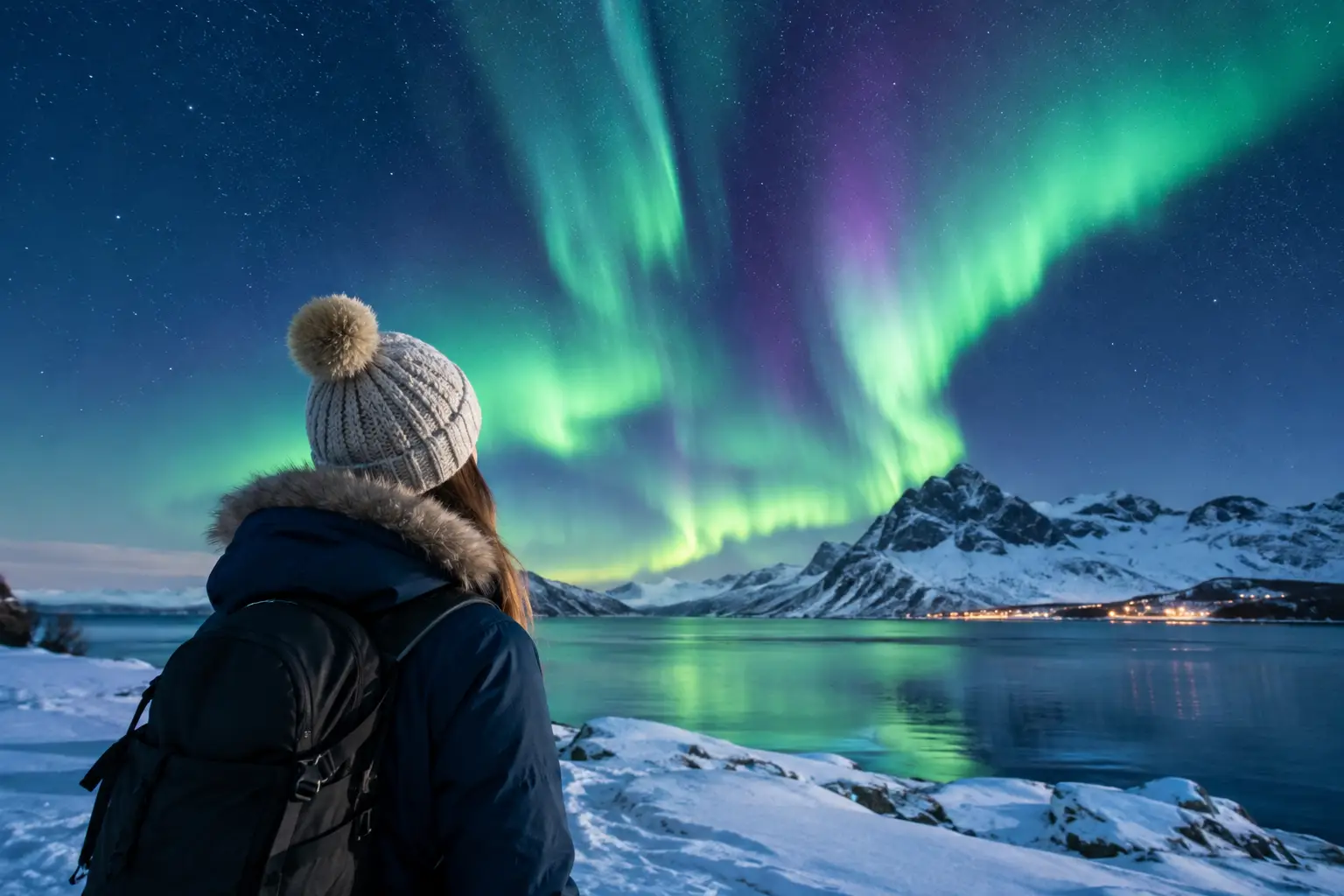
A tour van pulling out beneath a clear Icelandic sky can feel like the obvious way to chase the Northern Lights. But are aurora tours worth booking if you could rent a car, watch the forecast yourself, and stop wherever the sky looks darkest? Sometimes, absolutely. Other times, a tour adds cost without giving you much more than transportation.
The right choice depends less on whether you are a first-time visitor and more on three practical factors: how comfortable you are driving in winter, how flexible your schedule is, and whether conditions are likely to require local decision-making. Aurora viewing is a moving target. Clear skies, darkness, solar activity, and your ability to reach a good horizon all have to line up at the same time.
When an Aurora Tour Is Worth Booking
A guided tour is most valuable when it removes a problem you cannot easily solve on your own. In Iceland, that often means navigating icy roads, fast-changing weather, wind exposure, and patchy cloud cover after dark. In northern Norway, Finland, Alaska, or Northern Canada, it may mean reaching a dark location safely without spending your first night learning unfamiliar roads.
Experienced guides also know the local geography. They understand which valleys trap cloud, which coastal roads stay clearer in certain wind directions, where mountains block the northern horizon, and where it is safe to pull over. That knowledge matters most on marginal nights, when driving 30 to 60 minutes can be the difference between cloud cover and a visible display.
Tours can be especially worthwhile if you have only one or two possible aurora nights. A guide has an incentive to monitor conditions closely and make a call rather than leave you staring at several weather apps with conflicting maps. Many operators also offer a second attempt if the lights do not appear, though the exact policy varies. Read the terms carefully before treating a rebooking policy as a guarantee.
For photographers, a small-group or photography-focused tour can save time. The best guides can help you find a foreground, avoid nearby headlights, set up away from wind, and offer basic camera advice. That said, photographers should confirm group size before booking. A large coach tour may reach a good location, but it can be crowded, bright, and restrictive when the lights suddenly strengthen.
When Self-Driving May Be the Better Choice
Independent viewing can be better value if you already have a rental car, are confident on winter roads, and have three or more flexible nights. You can leave when conditions improve, stay longer when the sky is active, and choose a quieter location than a standard tour stop.
This approach works particularly well for road-trip travelers staying outside a city. A countryside hotel, cabin, or campground with dark surroundings can turn several evenings into viewing opportunities without paying for multiple tours. You may see a faint arc at 10 p.m., a bright expansion at midnight, then a second burst before dawn. A tour timetable cannot always wait for every possibility.
The trade-off is responsibility. Do not assume that a high KP number means you should drive into bad weather. KP describes a broad level of geomagnetic activity, not whether the aurora is visible from your exact location. Thick cloud cover will hide even a strong display, while a low-to-moderate event can be beautiful under a clear, dark sky.
You also need a realistic driving plan. In winter, the best viewpoint is not automatically the most remote one. Choose legal, safe pull-offs with a wide view of the sky. Keep enough fuel, warm layers, food, water, a charged phone, and a backup plan if roads deteriorate. Never stop in a traffic lane or walk into an unlit road for a photo.
What a Good Aurora Tour Actually Provides
Not all tours offer the same value, so compare the operating model rather than choosing only by price. The cheapest option may simply be a large bus ride to a common roadside stop. That can still work on a strong, clear night, but it may not be the best choice if personalized guidance matters to you.
Look for an operator that explains how it makes go-or-no-go decisions. Do they track cloud movement throughout the evening? Can they change locations? Do they limit group size? Is pickup included? Are thermal suits, hot drinks, tripods, or camera support actually part of the price? These details shape the experience far more than promotional photos of an unusually bright storm.
A longer tour is not automatically better, either. Five hours can be more useful than eight if the operator is mobile, communicates clearly, and gets you under open sky during the best window. Conversely, a fixed-location experience can be excellent when the venue has a dark setting, shelter, bathrooms, and a consistently favorable microclimate.
Questions to Ask Before You Book
Ask whether the tour leaves in light cloud and whether the guide will relocate if the forecast changes. Ask about cancellation and rebooking rules, minimum passenger numbers, hotel pickup boundaries, and whether children are suitable for the expected cold and late hours.
Also ask what the operator means by “guaranteed.” No reputable company can guarantee an aurora sighting. They may guarantee another tour, a partial refund, or simply that the tour will run. Those are very different promises.
Use Real-Time Data Before Deciding
The smartest decision is often made on the day of your tour, not weeks before it. Travel demand may require advance reservations, but the forecast should determine whether you keep a booking, choose a different departure, or set out independently.
Check more than one number. Solar wind conditions show whether energy is arriving from the Sun, while IMF Bz indicates whether that energy is likely to couple effectively with Earth’s magnetic field. A sustained southward Bz is generally more favorable than a northward one. Then check local cloud cover, precipitation, wind, visibility, moonlight, and the hours of true darkness.
AuroraVision brings these moving pieces together through its Live Aurora Score, real-time solar wind and IMF Bz, cloud cover, moon phase, weather, and Best Time Tonight tools. That is more useful than making a decision from KP alone, particularly when you are choosing between a tour pickup and a clear-sky drive. Turn on alerts before dinner so you can act when conditions shift instead of hearing about a display after it has faded.
A Simple Decision Rule for Your Trip
Book a tour if you have limited time, do not want to drive in winter darkness, are staying in a bright city, or want a guide to interpret changing conditions. Choose a small-group option if photography, flexibility, and a quieter setting matter most.
Consider self-driving if you have the right vehicle, winter-driving confidence, multiple open nights, and a dark base outside town. If conditions look uncertain, do not force the decision. You can book one guided night early in your trip, then use later clear evenings for independent viewing if you have a car.
There is also a useful middle ground: stay at an aurora-focused hotel or remote lodge and use a tour only when forecasts point to clearer skies elsewhere. This protects your comfort while preserving flexibility. It is often a better plan than committing every night to either a bus tour or a long solo drive.
The Real Value Is Less Stress, Not Better Physics
A guide cannot make the Sun more active or remove clouds from the sky. What a good tour can do is improve your odds of being in the right place when the conditions briefly cooperate. That is valuable when the trip is short, the roads are unfamiliar, or the cold makes every wrong turn feel expensive.
If you book, choose an operator for sound decisions and transparent policies, not dramatic marketing. If you go independently, watch the whole picture, drive conservatively, and give yourself time. The Northern Lights reward preparation, but the moment you remember will still be the one when you look up, see the sky begin to move, and realize you made it outside at exactly the right time.