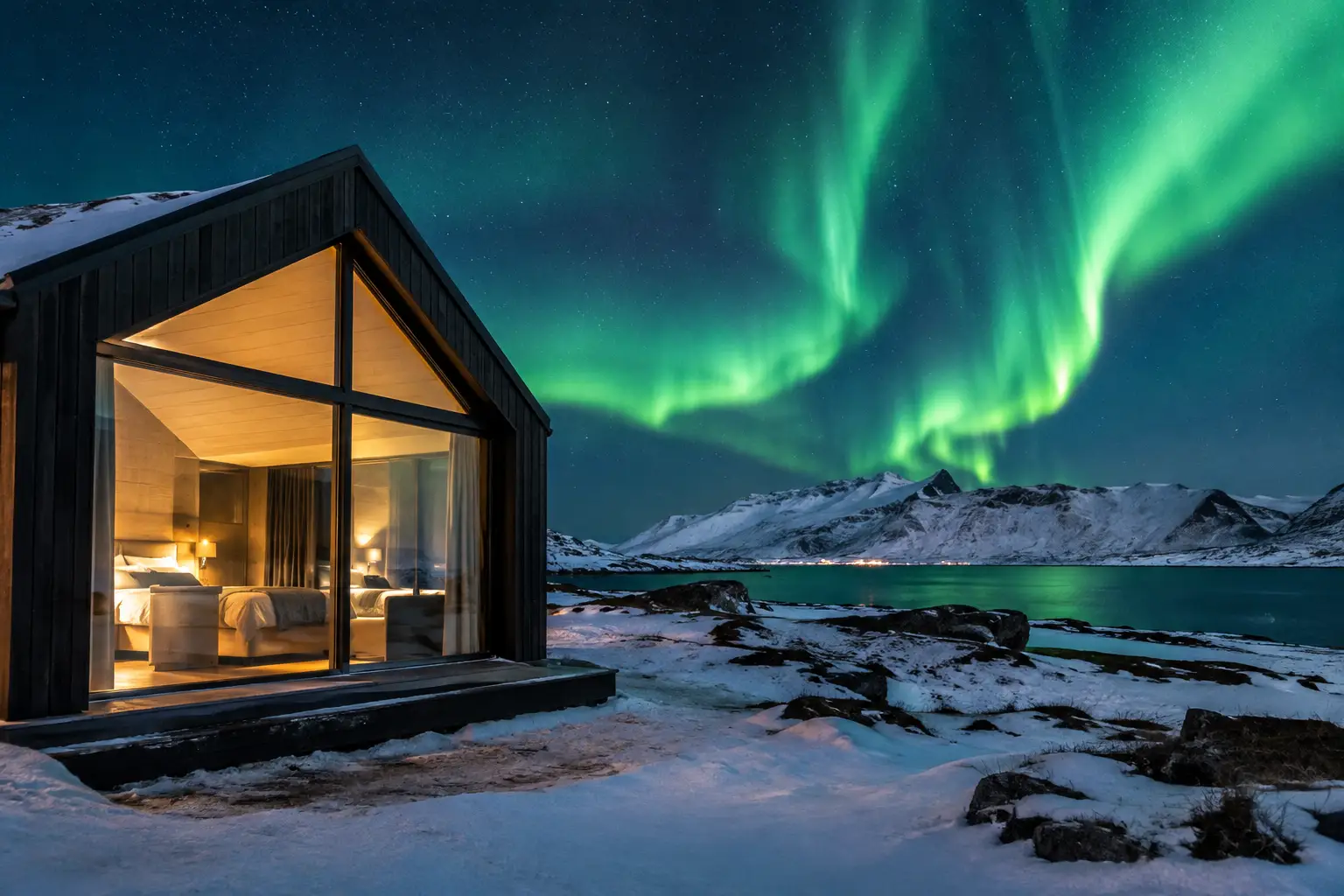
A cabin can give you the one thing a Reykjavík hotel rarely can: the freedom to step outside the moment the sky changes. But the best Iceland aurora cabins are not simply the most remote, most expensive, or most photogenic. They are cabins that pair genuinely dark surroundings with safe access, a clear horizon, and enough flexibility to act when solar activity and local weather finally line up.
That distinction matters in Iceland. A spectacular aurora display can be completely hidden by low cloud, while a modest display can look extraordinary from a dark, open valley. Choose your cabin as a viewing base, then use live conditions to decide when to stay outside, when to drive a short distance, and when to get some sleep for tomorrow night.
What Makes the Best Iceland Aurora Cabins?
A good aurora cabin has three jobs: it gives you dark skies, keeps you comfortable through changing winter weather, and puts you within reach of alternative viewing spots. The strongest options are usually outside larger towns but not so isolated that snow, wind, or an icy road turn a simple evening into a stressful one.
Look first at the cabin's immediate surroundings. An outdoor hot tub sounds ideal, but nearby floodlights, bright window reflections, and a view blocked by hills can undermine the experience. Check guest photos taken after dark if they are available. You want an open view toward the north and northeast, although an active aurora can spread across much of the sky. A broad view from the doorstep is far more valuable than a cabin that requires a nighttime hike to reach a clear horizon.
The building itself matters too. Choose a place with blackout curtains, reliable heating, an indoor bathroom, and enough room to warm up between checks outside. For photographers, a sheltered deck or yard is especially useful. Icelandic wind can shake a tripod, fog a lens, and make a long wait feel much colder than the temperature suggests.
Do not assume that a glass cabin is automatically the better choice. Panoramic windows can be wonderful for watching the sky from indoors, but interior lights and reflections often limit what you can see. A traditional cabin with a dark yard, a warm entryway, and a clear outdoor view may deliver a better night overall.
Choose a Region Before You Choose a Cabin
Iceland is small on a map but large in driving time, and winter road conditions should shape your decision. A cabin's location affects cloud patterns, access to services, and how easily you can move when one part of the country is overcast.
South Coast: dramatic scenery, variable cloud
The South Coast is popular because it combines waterfalls, black-sand beaches, glacier views, and many cabin-style stays within a manageable route from Reykjavík. It can be a strong choice for travelers who want a short winter itinerary rather than a dedicated aurora expedition.
The trade-off is exposure. Coastal winds can be intense, and cloud can move in quickly. A South Coast cabin works best when you have a rental vehicle, are comfortable monitoring road conditions, and can adjust your evening plan. Avoid stopping on roadside shoulders for a photo. Use designated pullouts or the cabin property only when it is safe.
Snæfellsnes: open horizons and road-trip flexibility
The Snæfellsnes Peninsula offers darker skies than the capital area and a mix of coastal and mountain views. Cabins near its small villages can work well for travelers who want an aurora base without committing to Iceland's farthest reaches.
Its weather changes fast, and mountain terrain can block parts of the horizon. When comparing properties, prioritize an open northern view over a famous daytime landscape. A mountain directly behind the cabin may look dramatic in daylight but can hide a low aurora display.
West Iceland and Borgarfjörður: practical for shorter stays
West Iceland is often an overlooked compromise between convenience and darkness. It is close enough to Reykjavík and Keflavík for a two- or three-night trip, yet rural enough to escape major light pollution. Cabins in this area can be particularly practical for first-time winter visitors who prefer not to drive deep into the country after dark.
A nearby town is an advantage, not a failure of the aurora plan. Fuel, groceries, a restaurant, and plowed roads make it easier to wait for a better window rather than forcing a risky drive in poor weather.
North Iceland: darker nights, longer commitment
North Iceland can offer excellent dark-sky conditions, especially around quieter rural areas away from Akureyri. It is a compelling option for travelers spending a week or more in Iceland, or for those building an itinerary around skiing, whale watching, or the Diamond Circle.
The trade-off is distance and winter logistics. If conditions close roads or your flight schedule changes, the extra driving can become a problem. Book a cabin with a flexible cancellation policy when possible, particularly between November and March.
Do Not Book on KP Index Alone
A cabin cannot create aurora activity, and a high KP forecast does not guarantee visible lights above your property. In Iceland, cloud cover is often the immediate deciding factor. Even when the sky is clear, visibility depends on several moving pieces: solar wind speed and density, the direction of the interplanetary magnetic field, known as IMF Bz, local weather, moonlight, and your own light pollution.
This is why a low-to-moderate KP night can still produce a memorable show if the IMF Bz turns southward, the solar wind strengthens, and a clear gap opens above you. The opposite is also true. A headline-making KP forecast is not much use beneath solid cloud.
Use the free AuroraVision app to check its Live Aurora Score alongside solar wind, IMF Bz, cloud cover, moon phase, weather, and the Best Time Tonight feature. That wider picture is more useful than treating any one number as a promise. Turn on alerts before dinner, keep warm clothes by the door, and be ready to reassess when conditions change.
Cabin Features That Make a Real Difference at Night
When you are comparing listings, the practical details deserve as much attention as the view. A cabin with private parking lets you return safely if you choose to drive to a clearer nearby area. A kitchen means you can eat on your own schedule rather than missing an active period during a restaurant reservation. Reliable Wi-Fi helps with forecasts, although you should download offline maps before leaving larger towns.
For a photography-focused trip, ask whether outdoor lights can be switched off or whether motion sensors can be disabled temporarily. Be considerate of hosts and neighboring guests, but this small detail can transform a scene. Bring a headlamp with a red-light mode, spare camera batteries, and traction-friendly boots. Never leave camera gear unattended in high wind.
Hot tubs deserve a realistic note. They are comfortable for watching a faint glow develop, but steam, wet hair, and bright control panels are not ideal for photography. Think of a hot tub as a pleasant place to wait, not the main reason to book an aurora cabin.
Plan for Three Nights, Not One Perfect Forecast
The best cabin strategy gives weather time to cooperate. If your schedule allows, book at least three nights in the same general region. This reduces pressure to chase every forecast and gives you multiple chances to catch a clear interval.
Each afternoon, check the cloud forecast for your cabin and nearby roads. If the outlook favors your property, stay local and preserve energy. If a clearer area is within a safe, reasonable drive, decide before darkness falls, fuel the car, and confirm road conditions. In high wind, heavy snow, or poor visibility, staying at the cabin is often the wiser call even if aurora activity is strong.
A guided Northern Lights tour can also complement a cabin stay, especially for visitors unfamiliar with winter driving. Guides can interpret local clouds, select safe viewing areas, and make the call to move or wait. Your cabin then becomes the quiet retreat where you can continue watching after the tour returns.
Make the Cabin Part of the Experience
The right Iceland cabin does not need to promise Northern Lights from the bed every night. It needs to give you a safe, dark, flexible base when the real conditions say it is time to look up. Choose open skies over novelty architecture, reliable winter access over extreme isolation, and several nights over a single all-or-nothing attempt. When the alert arrives and the clouds part, have your layers ready, step outside, and give the sky time to surprise you.