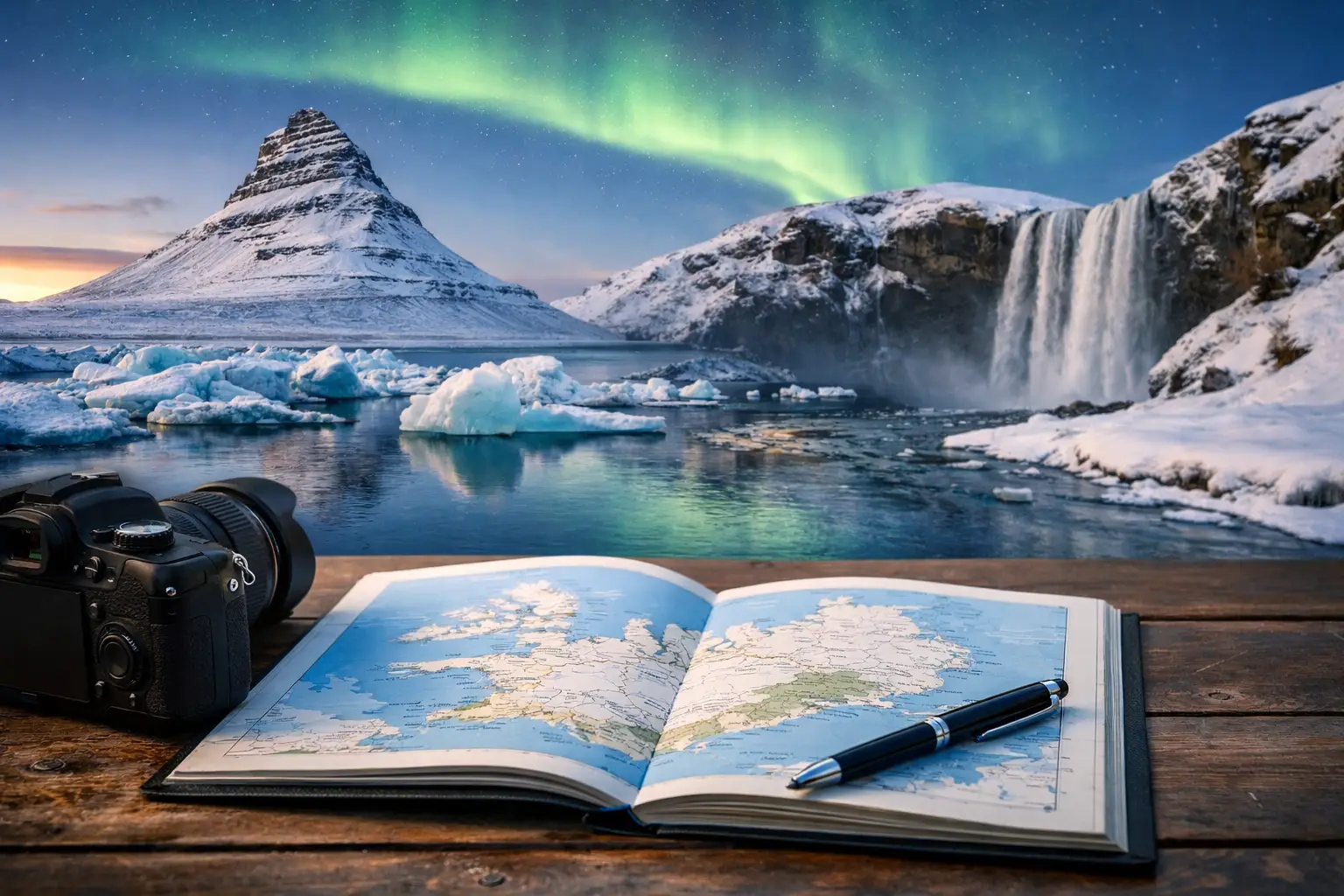
A winter road trip in Iceland is not a race around the Ring Road. It is a moving weather decision: a clear evening can turn an ordinary stop into an aurora watch, while wind, ice, or a closed mountain pass can make a planned drive the wrong choice. The best Iceland winter itineraries leave room for both realities - unforgettable dark skies and days when staying put is the smartest move.
Winter generally means short daylight hours, variable road conditions, and the possibility of Northern Lights from late afternoon through the night. Build around a few strong overnight bases rather than trying to check off every landmark. You will spend less time repacking, drive fewer miles in darkness, and have a better chance to respond when the sky clears.
Choosing the Best Iceland Winter Itineraries
Start with your actual available days, your confidence driving on icy roads, and whether aurora viewing is a central goal or a bonus. A first-time visitor with three nights should not attempt a full Ring Road circuit. A traveler with 10 or more nights, flexible bookings, and winter-driving experience can consider it, but only with buffer days.
No itinerary can promise Northern Lights. The aurora depends on activity high above Earth and clear skies below it. A high KP Index alone does not tell you whether a particular Icelandic valley will be cloudy, whether the solar wind is favorable, or whether bright moonlight will reduce contrast. Check conditions close to departure and every afternoon once you are in Iceland. AuroraVision combines its Live Aurora Score with solar wind, IMF Bz, cloud cover, moon phase, and local weather so you can decide whether to drive, wait, or get some sleep before conditions improve.
For every route below, choose accommodations with easy parking and a dark, open view when possible. A remote hotel can be excellent for the lights, but only if you can reach it safely in the forecast conditions.
1. The 3-Day Reykjavik and South Coast Route
This is the strongest short winter itinerary for first-time visitors. Base yourself in Reykjavik for the first night, then spend one or two nights around Hella, Selfoss, or Vik depending on road conditions and your appetite for driving.
On day one, use daylight for Reykjavik, the Sky Lagoon or a geothermal pool, and a relaxed introduction to Icelandic winter. Do not burn your first evening on a long aurora drive if you are jet-lagged. A guided Northern Lights tour from the city is a sensible option because guides can change location when clouds shift.
Use day two for the Golden Circle if conditions are stable: Thingvellir, Geysir, and Gullfoss are accessible choices, though they can be crowded. Alternatively, head south toward Seljalandsfoss and Skogafoss, then continue to Vik if the forecast supports it. The south coast gives you waterfalls, black-sand beaches, and broad horizons for an evening sky check.
Keep day three flexible. If roads are clear, visit Reynisfjara early and return west in daylight. If wind warnings or icy roads appear, reduce the route and prioritize safe travel back to Reykjavik. This itinerary works because it gives you a genuine Iceland experience without relying on a difficult winter crossing.
2. The 5-Day South Coast and Glacier Lagoon Route
With five days, add Skaftafell and Jokulsarlon Glacier Lagoon. This is one of the best Iceland winter itineraries for photographers because it pairs ice caves, glacier scenery, Diamond Beach, and long stretches of relatively open sky.
Travel from Reykjavik to Vik on day one, allowing time for the waterfalls and Dyrholaey only when access is open. Spend day two exploring around Vik and the lava fields near Kirkjubaejarklaustur. This slower pace matters in winter: low sun creates beautiful light, but it also means your useful sightseeing window disappears quickly.
On day three, continue east through Skeidararsandur to Skaftafell or Jokulsarlon. Book glacier walks and ice cave excursions with licensed operators. Natural ice caves change every season, and access depends on conditions, so a guided tour is the responsible way to see them.
Use day four as your weather buffer around the glacier lagoon. A calm, clear night here can be extraordinary, with aurora reflections over ice or light moving above the glacier. It can also be cloudy and windy. Stay flexible rather than treating the night as a guaranteed photo session.
Return west on day five. It is a long drive, so leave early, monitor road updates, and avoid adding detours just because a map says they are nearby. Winter driving becomes tiring faster than many visitors expect.
3. The 6-Day Snæfellsnes and South Coast Loop
Travelers who want variety without committing to the Ring Road can combine the Snæfellsnes Peninsula with the south coast. Plan two nights in or near Reykjavik, one or two on Snæfellsnes, and two around Vik or Hella.
Snæfellsnes delivers Iceland in miniature: lava fields, fishing villages, dramatic coastal mountains, and Kirkjufell near Grundarfjordur. It is a rewarding photography region, but exposed roads can be affected by wind and snow. If the peninsula forecast is poor, use the day for Reykjavik museums, geothermal bathing, or a nearby sightseeing route instead.
Then turn south for the Golden Circle and the south coast. Avoid treating this as a strict clockwise loop. In winter, it is better to return to Reykjavik between regions if that gives you a safer forecast window and an easier place to change plans.
This route is particularly good for couples and families who want a balanced trip: scenic driving, accessible services, and multiple opportunities for clear-sky aurora viewing without packing every morning.
4. The 8-Day South Coast, Eastfjords, and North Iceland Trip
Eight days can support a partial or full Ring Road route, but it is still ambitious in winter. The reliable version gives the south coast four days, the Eastfjords one or two days, and the north two days, with at least one day available to absorb a delay.
After reaching Jokulsarlon, continue through Hofn and the Eastfjords only if the weather is cooperative. This part of Iceland is beautiful and quieter than the south, but it is not the place to force a schedule. Mountain roads, visibility, and wind can change rapidly.
From Egilsstadir, make your way toward Lake Myvatn and Akureyri. Myvatn is a strong winter stop for geothermal landscapes and dark skies, although snow, wind, and cloud can limit access. Akureyri has more services and can be a practical overnight base when conditions are unsettled.
Do not plan to cross the interior. Highland roads are closed in winter, and a rental SUV does not change that. A four-wheel-drive vehicle may improve traction and clearance on suitable roads, but it does not make a road open or remove the risk of wind gusts and black ice.
5. The 10-Day Ring Road With Real Winter Margins
Ten days is the minimum comfortable window for a winter Ring Road plan, and 12 to 14 is better. The key is not adding more stops. It is protecting the days that weather may take away.
A sensible structure is two nights in the Reykjavik area, two on the south coast, two near Jokulsarlon or the Eastfjords, two in the north, and two nights reserved for west Iceland or schedule recovery. If you lose a day to a storm, skip a region rather than driving late into worsening conditions.
The west side can include Borgarfjordur, the Snæfellsnes Peninsula, or a final Reykjavik night before departure. This final buffer also helps travelers whose flights leave early, because Icelandic winter weather can affect airport drives as well as sightseeing routes.
For aurora-focused travelers, this longer itinerary creates more than one chance at a clear sky. That is the real advantage. The lights may appear during a modest geomagnetic event if your location is dark and cloud-free, while an intense event is useless beneath solid cloud.
Winter Driving and Aurora Timing: Make the Call Each Day
Check road status, weather warnings, and your route before breakfast and again before departing. Fuel up when you have the chance, keep warm layers and water in the car, and never stop in an unsafe roadside location to photograph the sky. Pull fully into a designated parking area and avoid walking onto ice near waterfalls, cliffs, or surf.
For aurora viewing, start checking conditions after dusk rather than waiting for a dramatic alert. Look for a clear break in the cloud forecast, give your eyes time to adjust, and scan toward the north and overhead. The first sign can be a faint gray-green arc that your camera reveals more clearly than your eyes.
The best winter itinerary is the one that lets you change direction without losing the trip. Leave space in your reservations, watch the sky with the same care you watch the roads, and let Iceland's conditions decide which moment is worth chasing tonight.