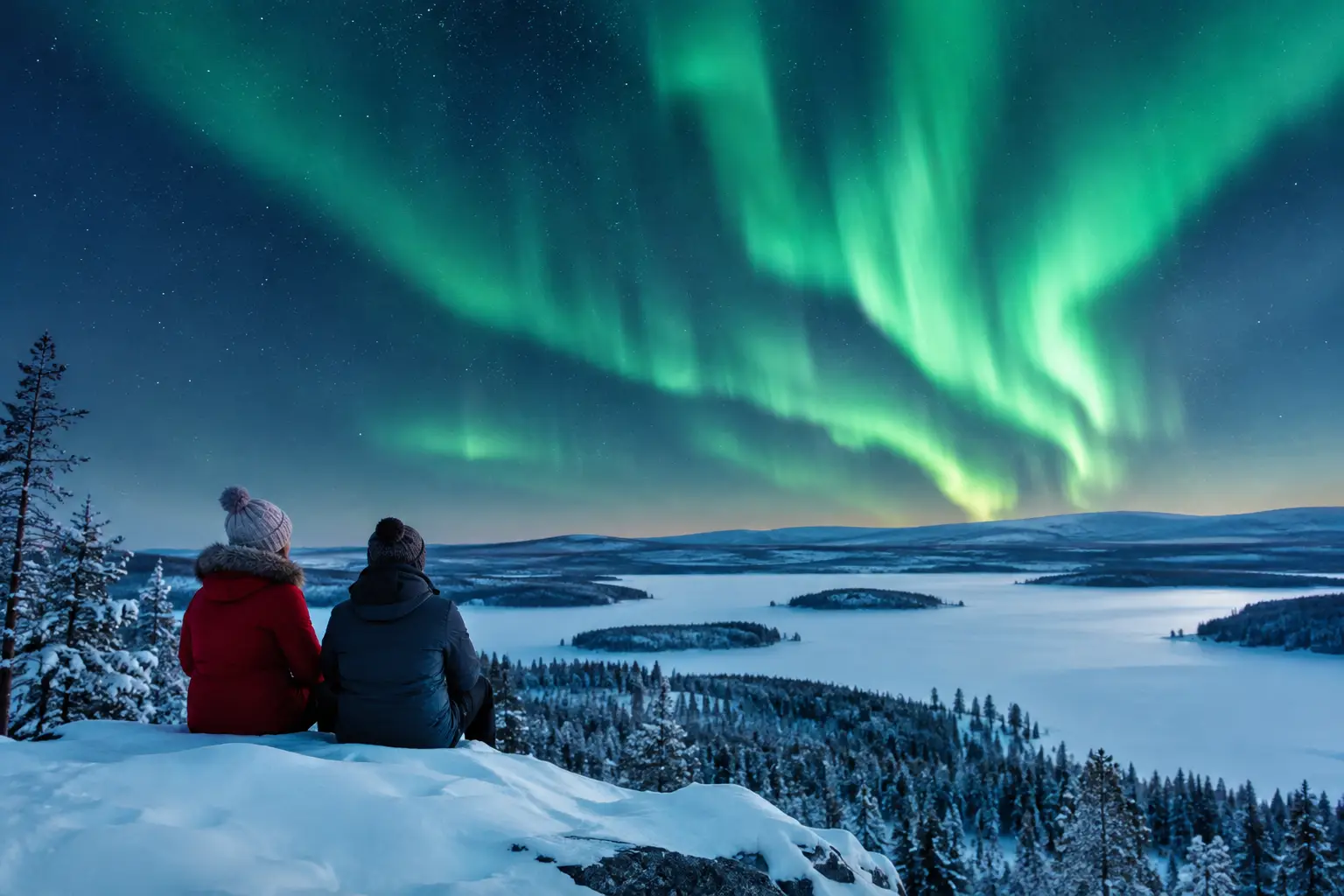
A Finland aurora itinerary works best when it is built around flexibility, not a single “perfect” night. You may have strong solar activity and solid aurora potential, then lose the display to cloud cover. Or you may see a beautiful, fast-moving arc during a modest geomagnetic event because the sky above you is clear, dark, and open.
For most travelers, seven nights in Finnish Lapland offers a practical balance: enough time to absorb poor weather, settle into the Arctic rhythm, and react when conditions improve. The goal is not to chase a dramatic KP number. It is to give yourself repeated opportunities to be outside when solar wind, IMF Bz, local weather, cloud cover, moonlight, and darkness line up.
Finland Aurora Itinerary: Choose One Main Base
Finnish Lapland is large, and winter driving takes longer than maps suggest. A common mistake is booking a new hotel every night in pursuit of a better forecast. That can leave you packing during the clearest evening of the trip.
Choose one primary base for at least four or five nights, then add an optional second base only if you want a different experience. The best choice depends on how you want to travel.
Saariselkä is a strong option for travelers who want resort services, restaurants, activity providers, and access to dark roads outside the village. It is convenient for first-time Arctic visitors and works well without a packed driving schedule.
Inari offers more open horizons around Lake Inari and a quieter, more remote feel. It suits independent travelers, photographers, and anyone willing to rent a car. The area has less surrounding light than larger resort centers, but services can be more spread out.
Levi and Ylläs are practical choices for travelers combining skiing, winter activities, and aurora viewing. Both offer a wider range of lodging and tours. You will need to get beyond the busiest village lights for the best sky, but that is usually an easy drive or guided transfer.
Kilpisjärvi is one of Finland’s most compelling locations for serious aurora travelers. Its far-north position and dramatic fell landscape can be excellent, but it is more remote, weather can be harsher, and the journey requires more commitment. It is best for travelers comfortable with winter conditions or those joining local guided excursions.
Days 1-2: Arrive, Reset, and Learn Your Sky
Fly into Ivalo, Kittilä, or Rovaniemi based on your base, collect your rental car if you are driving, and keep the first afternoon simple. Buy groceries, confirm winter clothing, and identify two or three nearby viewing locations before dark. Look for a safe pull-off, lake shore, open field, or designated aurora site with a broad northern view and no direct streetlights.
Do not schedule an all-day snowmobile trip immediately before your first watch. Jet lag, cold, and a late night are a difficult combination. Use the first two evenings to get comfortable going outside, even if the forecast looks average. The Northern Lights often begin as a faint gray-green arc or a low band that does not look dramatic to the naked eye at first.
A camera can reveal more color and structure than your eyes, but do not spend the whole night looking at the back screen. Let your eyes adjust for at least 15 to 20 minutes, avoid bright phone displays, and scan from north to east and west. During stronger activity, aurora can spread overhead or appear in unexpected parts of the sky.
Days 3-4: Build Flexibility Into Your Finland Aurora Itinerary
Plan daytime activities that can end early. Husky sledding, reindeer visits, cross-country skiing, sauna time, and snowshoeing all fit well, but leave a recovery window before your evening watch. Aurora travel rewards people who can eat dinner at 5 p.m., rest for an hour, and be ready to leave when the sky clears at 9:30.
This is also the right point to consider a guided aurora tour. A good local guide contributes more than transportation. They understand which roads stay open, where low clouds often break, how to read local conditions, and how to keep guests warm and safe during long waits. Tours are especially useful if you do not want to drive on icy roads or if your hotel is in a bright, built-up area.
Independent travelers have a different advantage: they can wait for a short cloud break and move on their own schedule. Keep your fuel tank comfortably above half, bring a charged phone and power bank, and never stop in an unsafe roadside position. Finnish winter roads are well maintained, but darkness, blowing snow, and reindeer demand patience.
Day 5: Keep a Weather-Move Day
Reserve one day with no fixed bookings. This is your weather insurance.
If your area has persistent cloud, use the day to evaluate a short relocation to a clearer microclimate. Do not assume that driving two hours north always solves the problem. A cloud system can cover much of Lapland, while a smaller local layer may clear just 30 minutes away. Check the forecast at the time you are deciding, not only in the morning.
This is where AuroraVision is useful. The free app combines a Live Aurora Score with real-time solar wind, IMF Bz, cloud cover, moon phase, and weather, rather than treating the KP Index as a complete answer. A favorable Bz, for example, can support aurora activity when the magnetic field points southward, but it cannot remove clouds above your viewing site. Use the live data to decide whether to wait, drive, join a tour, or get some sleep and save energy for the next window.
Days 6-7: Prioritize the Best Time Tonight
On your final nights, avoid the temptation to stay out continuously from sunset until dawn. In midwinter, Finland has long darkness, and aurora timing can be unpredictable. You will have better odds if you use a deliberate routine.
Eat early, dress before conditions peak, and watch for updates through the evening. If skies are clear and the Live Score improves, go to your selected spot immediately. If skies are overcast and no break is likely, rest instead of standing outside for hours. Saving your energy is part of a smart itinerary, especially when temperatures fall well below freezing.
Moonlight deserves context. A bright moon can reduce contrast for faint aurora, particularly in photographs, but it does not cancel a strong display. It can also illuminate snow-covered landscapes beautifully, giving photographers a more detailed foreground. The best response is usually to find a darker viewing direction or place the moon behind you, not to write off the night.
What to Pack for Long Aurora Watches
Aurora viewing is mostly waiting comfortably in the cold. Your clothing matters more than almost any camera accessory. Start with a moisture-wicking base layer, add insulating wool or fleece, then use a windproof outer shell. Insulated boots, warm socks, mittens, a hat, and a neck gaiter are essential.
Bring chemical hand warmers if you tend to get cold, but do not rely on them as your only plan. A thermos with a hot drink, an insulated seat pad, and a small snack can turn a two-hour wait into an enjoyable part of the trip. For photography, carry spare batteries inside an inner pocket because cold drains them quickly. A tripod, wide-angle lens, remote shutter option, and headlamp with a red-light setting are helpful, though none are required to enjoy the sky.
Set Expectations That Leave Room for Wonder
The Northern Lights are not a nightly performance, and no itinerary can guarantee them. A seven-night stay improves your chances because it gives weather and space weather time to change. It also gives you room to enjoy Finland even when the sky stays quiet.
Book the experiences you would value without aurora, choose a base that suits your travel style, and protect several evenings from rigid plans. Then, when the clouds part and the solar conditions turn favorable, you will not be searching for a parking spot or packing a suitcase. You will be outside, facing the dark horizon, ready for the moment the sky starts moving.