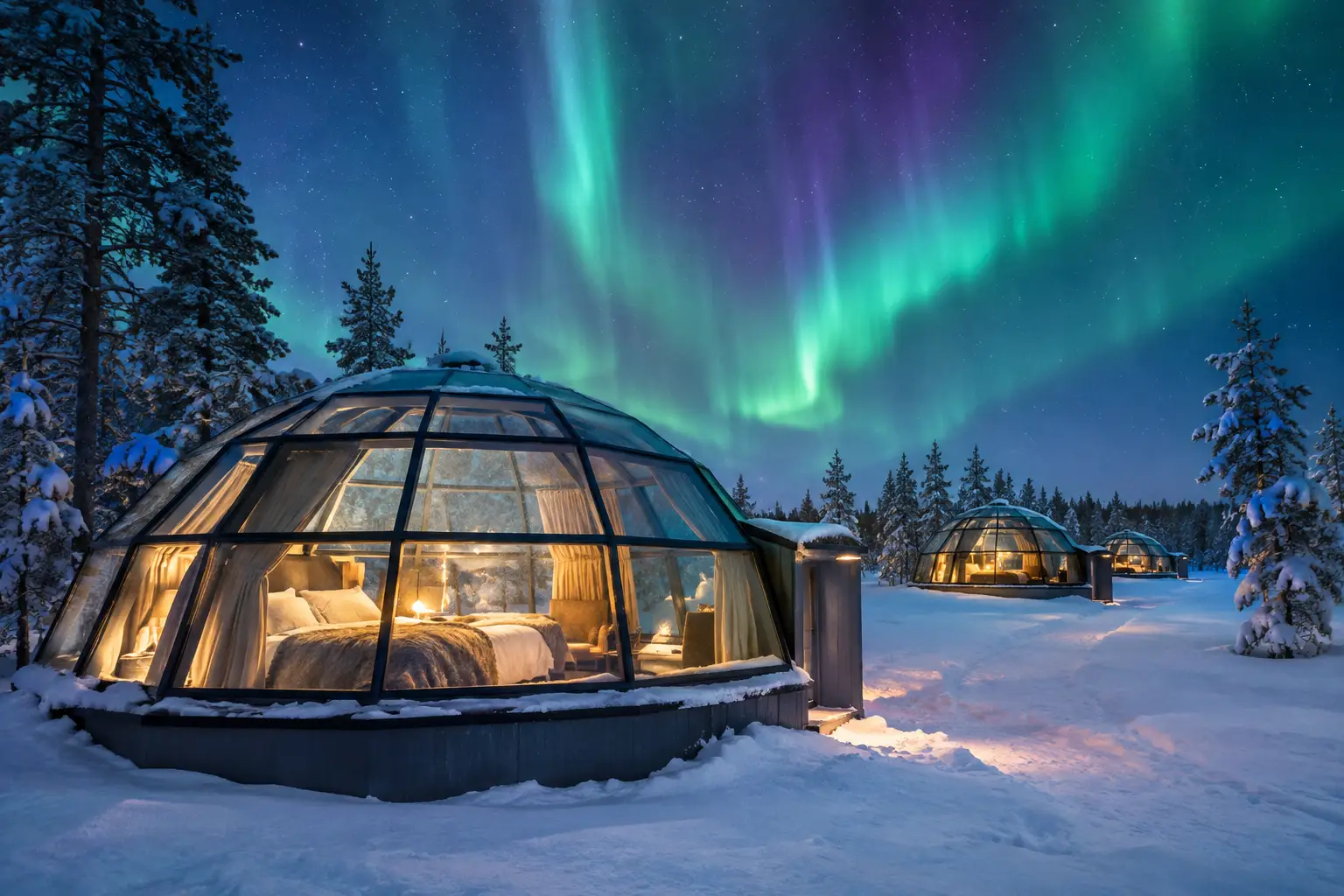
A Finland glass igloo guide should start with one honest fact: sleeping beneath a glass roof does not guarantee Northern Lights. It does, however, give you a warm, comfortable base for watching the sky when conditions line up - and that can make a Lapland trip feel extraordinary. The best stays combine a low-light location, a realistic weather plan, and enough flexibility to step outside when the aurora is stronger than it looks through the glass.
What a Glass Igloo Stay Is Really Like
A Finnish glass igloo is usually a heated cabin with a transparent dome or panoramic roof positioned over the bed. Some are compact, design-forward rooms built for couples; others are larger cabins with a private sauna, fireplace, kitchen, and separate sleeping areas. Most are in Finnish Lapland, where long winter nights and relatively low light pollution create good aurora potential.
The experience is less about lying in bed under a guaranteed green sky and more about reducing the friction of a late-night watch. You can check the horizon from a warm room, rest between alerts, and avoid getting fully dressed for every passing patch of cloud. For first-time winter travelers, that comfort matters.
Still, the glass has limits. Frost, snow, condensation, interior lights, and reflections can weaken the view. The roof may frame only part of the sky, while a bright display can stretch well beyond it. When the aurora becomes active, the best move is often to leave the bed, turn off exterior lighting if permitted, and walk to the property’s designated viewing area.
Finland Glass Igloo Guide: Choosing the Right Location
Finnish Lapland covers a large area, and location shapes both the look of your trip and your odds of finding a clear sky. The northernmost regions generally have darker skies and longer aurora seasons, but a more remote address can also mean fewer restaurants, limited transport, and less flexibility if weather disrupts plans.
Resorts around Saariselkä, Inari, Levi, Ylläs, Rovaniemi, and Kilpisjärvi all offer different trade-offs. Rovaniemi is often the easiest for international visitors because it has an airport, frequent services, and plenty of tours. It is also more developed, so you may need to travel away from local lights for the best photography.
Inari and Saariselkä offer a stronger wilderness feel while remaining practical for many travelers. Kilpisjärvi is farther west and can be compelling for travelers who prioritize dramatic fells, darker surroundings, and a quieter landscape. It also requires more planning, especially in deep winter.
Do not choose only by the property’s aurora photos. Ask practical questions before booking: Is the igloo surrounded by trees? Is there an open view toward the north? Can guests walk safely to a darker viewing spot? Is a shuttle, rental car, or guided aurora trip available if clouds cover the resort?
A glass igloo with excellent service near a road may be a better fit than a remote dome if you have only a few nights, dislike winter driving, or want restaurant options. On the other hand, independent travelers with a rental car can benefit from a base that offers several routes toward clearer local weather.
Pick Dates for Darkness, Not Just Snow
Northern Lights season in Finland broadly runs from late August through early April, when nights are dark enough for aurora viewing. A glass igloo trip is most commonly booked from December through March, when snow-covered forests and winter activities are at their peak. But the “best” month depends on your priorities.
September and October bring milder temperatures, open water in some areas, and autumn color early in the season. The nights are getting dark, but reliable snow activities are not yet guaranteed. November is often a transition month: dark and potentially productive for aurora, yet sometimes wet, icy, or low on snow.
December offers festive atmosphere and deep winter darkness, but holiday demand pushes rates high. January and February are ideal for travelers who want true Arctic winter, with cold temperatures, snow, and a full menu of activities. March is a favorite for many photographers because daylight is longer, snow remains common, and travel can feel more comfortable - though aurora viewing still depends on darkness, clouds, and solar activity.
Avoid treating the KP Index as a booking tool. It is a broad planetary measure, not a promise for one Finnish resort on one night. At Lapland latitudes, aurora can appear during modest geomagnetic activity. Clear skies, local darkness, and the direction and strength of the solar wind often matter more to your immediate view.
Give Yourself Enough Nights
Two nights in a glass igloo can be a memorable splurge, but it is a gamble if seeing the aurora is your main goal. Clouds can block the sky for an entire night regardless of solar activity. Four to five nights in the region gives you more chances to catch a clear break and prevents the trip from feeling ruined if the first night is overcast.
A smart approach is to split your stay. Book one or two high-comfort nights in a glass igloo, then add standard hotel rooms, a cabin, or an apartment nearby. This can protect your budget while giving you more viewing opportunities. It also lets you choose the igloo nights later in the trip if your schedule has flexibility, although that requires booking well ahead during peak season.
Plan daytime activities without exhausting yourself. A husky ride, snowmobile excursion, reindeer visit, ski day, or sauna can make the trip worthwhile even under clouds. But leave at least one evening with no fixed dinner reservation or long excursion. Aurora often rewards travelers who can respond quickly.
How to Watch From Your Igloo Without Missing the Best Display
Keep your room as dark as possible. Switch off overhead lights, close bathroom doors, and reduce screen brightness. If reflections remain, use a dark blanket or jacket around the viewing area, provided you do not block vents or damage the room.
Look outside regularly rather than staring through the roof for hours. Early aurora can appear as a faint gray-green band, a low arc, or a subtle textured cloud. Cameras often reveal green color before your eyes do, but the display can strengthen quickly. If you see movement, structure, or a band growing across the northern sky, get outside and allow your eyes time to adjust.
For photos, a glass roof is usually not the ideal shooting position. Reflections and curved panels complicate images, while window glass can soften stars. Bring a tripod and use the outdoor viewing area. Start with a wide aperture, a short-to-medium exposure, and an ISO setting that preserves detail rather than turning the sky into noisy green haze. Exact settings depend on the brightness and movement of the aurora.
Use Live Conditions, Not Hope
The best viewing decision is made close to the moment. Before bed and whenever conditions change, check cloud cover first. A strong geomagnetic event above thick cloud is invisible, while a modest event beneath a clear sky can be unforgettable.
AuroraVision is useful here because its free app combines a Live Aurora Score with solar wind, IMF Bz, cloud cover, moon phase, weather, and the best time tonight rather than asking travelers to rely on the KP Index alone. Turn on alerts before your trip, then use the live picture to decide whether to stay at the igloo, walk to a darker spot, or join a guide who can drive toward clearer skies.
Moonlight deserves context. A bright moon can make faint aurora less visible to the eye and affect photographs, but it also lights up snowy landscapes beautifully. Strong aurora can still stand out well under moonlight. Do not cancel an outing simply because the moon is up.
Transportation and Winter Safety Matter
If you plan to chase clearer weather independently, reserve an appropriate rental car early and confirm that winter tires are included. Finnish roads are well maintained, but darkness, snow, ice, drifting, and wildlife require calm, conservative driving. Keep fuel above half a tank, wear layers, carry a charged phone, and never stop in an unsafe roadside location for photos.
Guided aurora tours are a sensible alternative for travelers who do not want to drive. A good guide adds more than transport: they read local cloud patterns, know legal and safe viewing areas, help with camera setup, and can make the waiting time more enjoyable. Tours cannot control clouds or solar activity, so be cautious of any operator promising a sighting.
For a quieter evening, ask your accommodation about marked walking paths, loaner snowshoes, warm suits, and nearby shelters. The right option depends on your comfort with cold, mobility, and how far you are willing to go after midnight.
A glass igloo is at its best when you treat it as a front-row seat, not a guarantee. Build in extra nights, keep your plans flexible, and be ready to step into the cold when the sky finally starts moving.