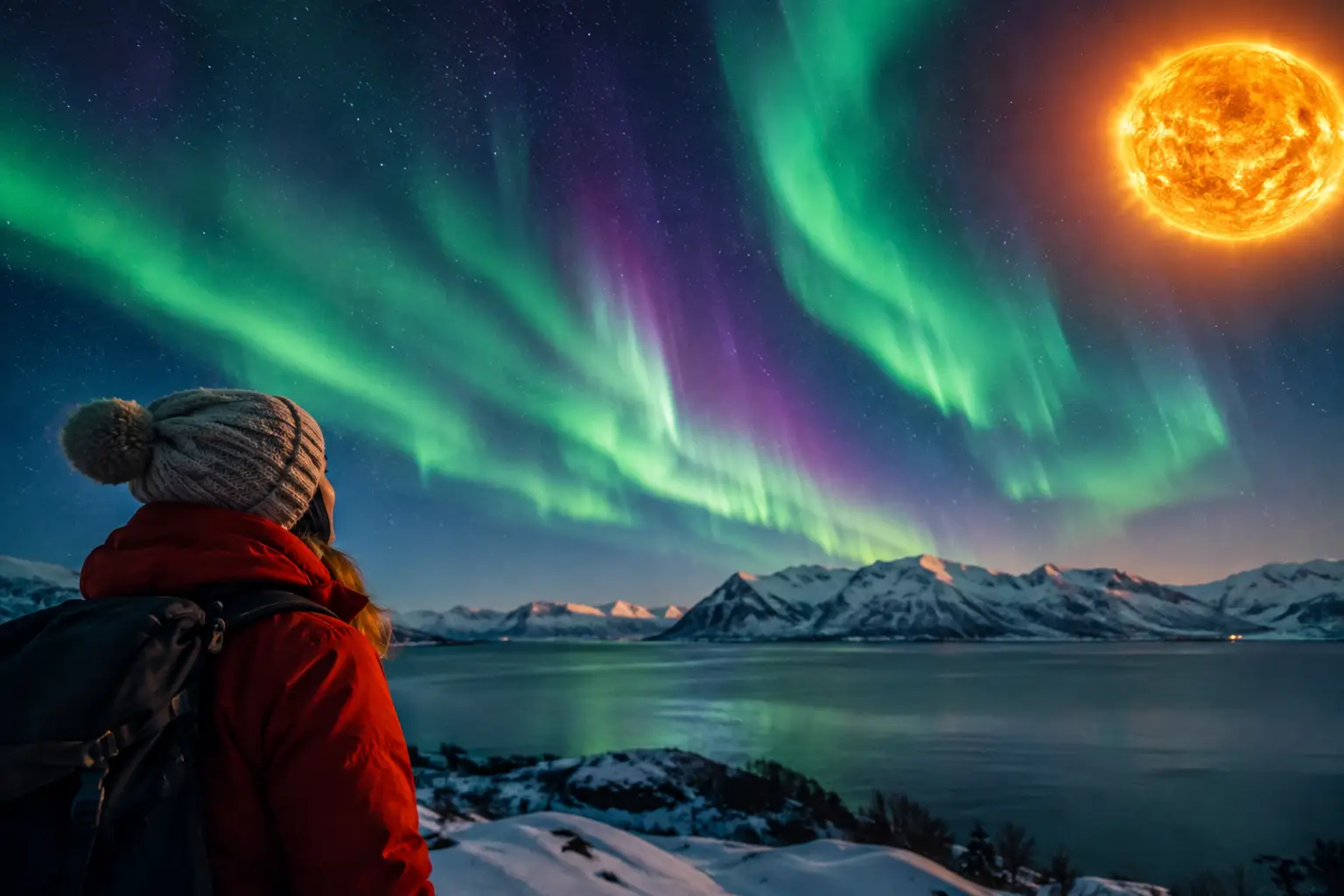
A solar maximum can make headlines for spectacular aurora displays, but it cannot tell you whether the sky above your hotel in Iceland or cabin in northern Norway will be clear tonight. The solar cycle peak timeline is useful for choosing the right years for an aurora trip. For choosing where to drive, when to wait, or whether to book a tour, you need live conditions.
The Solar Cycle Peak Timeline at a Glance
The Sun moves through a repeating pattern of magnetic activity that lasts about 11 years. This is called the solar cycle. Near solar minimum, the Sun generally produces fewer sunspots, solar flares, and coronal mass ejections. As activity rises, those events become more frequent, increasing the chances of geomagnetic activity that can power Northern Lights displays farther from the Arctic.
Solar Cycle 25 began after the previous minimum in late 2019. Activity rose quickly through 2021, 2022, and 2023, then reached an unusually active high period beginning in 2024. Rather than one precise peak date, solar maximum is usually a broad plateau. High activity can continue for months or even a few years before the longer decline begins.
That matters because a headline saying the peak has passed does not mean aurora season is over. Strong solar storms can occur during the declining phase, and memorable displays have happened well away from the official maximum. Travelers should think in terms of an active era, not one magic week or month.
Why scientists confirm the peak afterward
Scientists track the solar cycle using measures such as the smoothed sunspot number. The smoothing process reduces daily and monthly noise, but it also means the exact highest point can only be confirmed after enough data has passed. Forecast models can estimate when a peak may occur, yet the Sun does not follow a fixed schedule.
For travelers, the practical timeline is simple: the mid-2020s are a favorable period for solar activity, and elevated opportunities should continue as the cycle gradually declines later in the decade. The next solar minimum is expected around the end of the 2020s or early 2030s, although the precise timing remains uncertain.
What Solar Maximum Changes for Northern Lights Trips
A more active Sun raises the odds of stronger geomagnetic disturbances. During a major storm, the auroral oval expands southward. That can create opportunities in places where the Northern Lights are less frequent, and it can produce brighter, more active displays in high-latitude destinations.
For Iceland, northern Norway, Finnish Lapland, Swedish Lapland, Greenland, Alaska, and Northern Canada, solar maximum is a welcome advantage but not a requirement. These are already excellent aurora regions because they sit close to or beneath the normal auroral oval. A modest level of geomagnetic activity can be enough when the sky is dark and clear.
The trade-off is that solar maximum brings more possibility, not more certainty. A strong geomagnetic event may arrive during a snowstorm, beneath low cloud, or while the most intense activity is visible from another part of the Arctic. Conversely, a quiet solar night can still produce a beautiful arc above a clear, dark landscape in Lapland or northern Iceland.
Why the KP Index Cannot Plan Your Evening
The KP Index is a useful planetary measure of geomagnetic disturbance, but it is not a visibility forecast. It is calculated from a network of magnetometers and reported in three-hour intervals. It does not show whether clouds cover your location, whether activity is happening right now, or whether the solar wind is currently favorable.
A high KP value can be exciting, especially for travelers at lower latitudes. Yet in Tromso, Abisko, or the Westfjords, an exclusive focus on KP can lead to missed opportunities. You may be under clear skies with a visible aurora during KP 2, while someone else waits indoors for a KP 5 forecast that never lines up with clear weather.
The best decision uses several signals together. Solar wind speed shows how quickly charged particles are arriving from the Sun. Solar wind density can add energy to the interaction. IMF Bz describes the direction of part of the Sun's magnetic field. When Bz turns southward, it often helps energy enter Earth's magnetic environment more efficiently. Those conditions can change quickly, sometimes within minutes.
Cloud cover, local weather, moon phase, darkness, and your viewing location are just as important. The solar cycle sets the broad background. Real-time data decides whether this particular night is worth the drive.
Plan the Trip Around Darkness, Not the Peak Date
If you are selecting travel dates, prioritize a destination's dark season first. In Iceland, northern Scandinavia, Alaska, and Northern Canada, the core aurora travel period generally runs from late August through early April. The darkest months provide the longest viewing windows, while late August and early April can offer milder roads and useful twilight for photography.
Solar maximum does not create darkness. A summer trip to Svalbard may coincide with elevated solar activity but still have no dark nighttime sky during the midnight sun period. Similarly, a cloudier week in a normally excellent destination can limit viewing more than a quiet Sun ever would.
Build flexibility into the itinerary if the aurora is a major goal. A three- or four-night stay gives you more chances to work around clouds and changing space weather than a single overnight stop. Independent road trippers should consider winter driving conditions, daylight hours, and the availability of safe pullouts. Guided tours can be a practical choice when you want a local driver to chase clearer skies and manage changing conditions.
Photographers should also keep expectations grounded. A solar storm can produce fast-moving structure, vivid camera color, and aurora across much of the sky, but no forecast can promise that scene at a specific hour. Bring a tripod, a wide-angle lens, spare batteries, and warm layers, then be ready to adjust exposure as the display changes.
Use a Live Forecast When Conditions Matter
A solar-cycle chart is excellent for understanding the bigger picture. It is not a substitute for a live aurora dashboard on the night you are traveling. Before heading out, check the local cloud forecast, darkness window, current solar wind, IMF Bz, and whether geomagnetic activity is rising or fading.
AuroraVision brings those signals together in a Live Aurora Score rather than asking travelers to interpret the KP Index alone. The free app also shows real-time solar wind, IMF Bz, cloud cover, weather, moon phase, and the Best Time Tonight, helping you decide whether to stay near your accommodation, drive toward a clearer area, or wait for an alert.
If you book a Northern Lights tour, use the same approach. Check conditions before departure, dress for waiting outside, and treat the guide's local weather judgment as part of the forecast. A good tour is not simply chasing high KP. It is finding a safe, dark opening in the clouds when the sky and solar conditions have a real chance to align.
The Most Useful Way to Read the Timeline
The solar cycle peak is a reason to be optimistic about aurora travel in the mid-2020s, particularly if you are considering a first Arctic trip. It should not pressure you into booking a single inflexible night or expecting a major storm on demand. High-latitude destinations remain worthwhile throughout the cycle, while lower-latitude viewing benefits more directly from strong events.
Choose a dark-season trip with enough nights to absorb weather changes, then let real-time conditions guide the final decision. The Sun may set the stage for a remarkable season, but a clear sky and a well-timed departure are what help you avoid missing the moment.