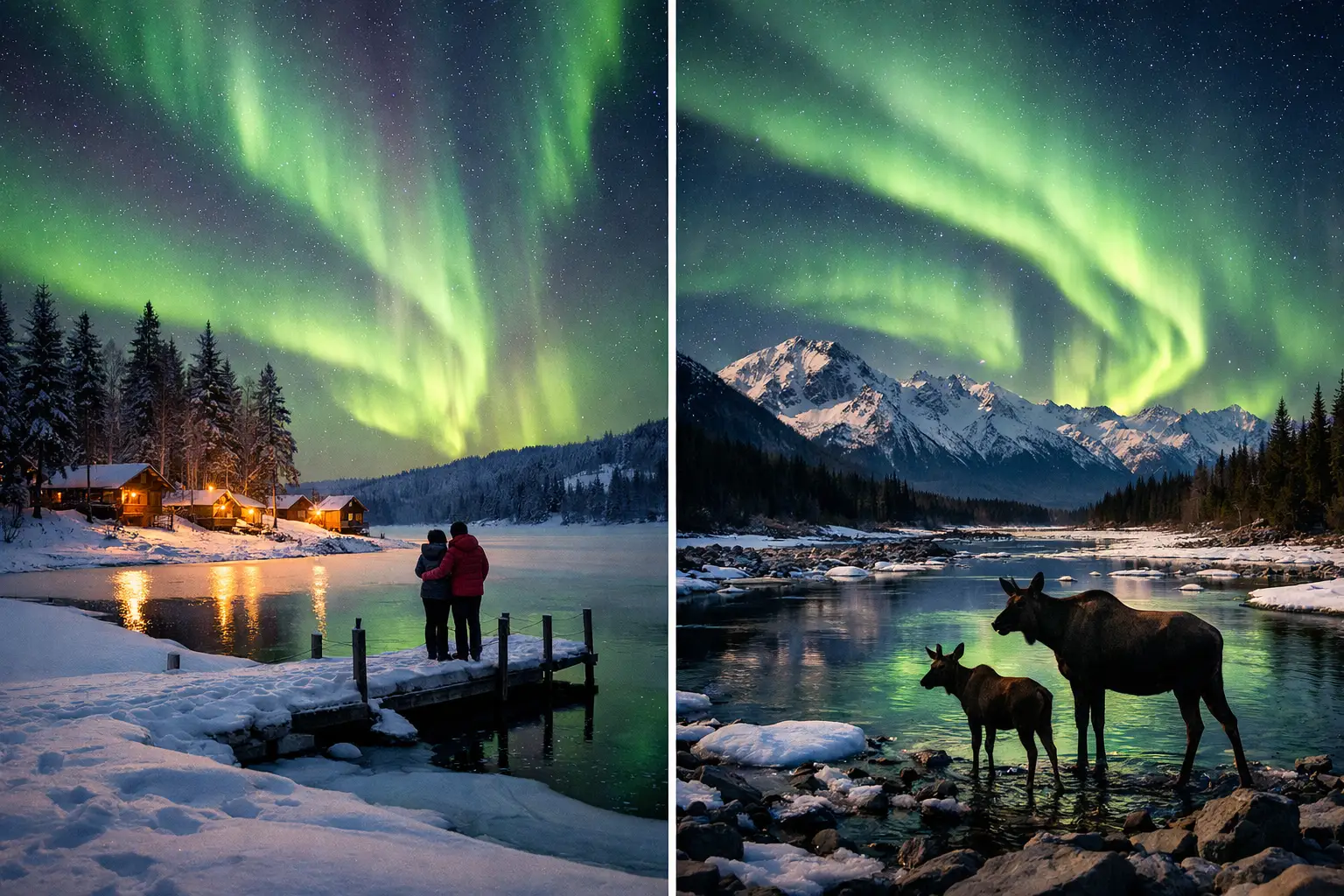
A Finland Alaska aurora trip can deliver the same unforgettable moment: a quiet sky suddenly moving with green light. But the trip around that moment feels very different. Finland is built for easy Arctic vacations, with compact destinations, glass cabins, and straightforward transfers. Alaska asks for more distance, more self-reliance, and more flexibility - then rewards travelers with vast skies and a stronger sense of wilderness.
The better choice is not the destination with the highest number on a forecast. It is the place that matches your travel style, available dates, driving confidence, budget, and willingness to respond when conditions change.
Finland Alaska aurora: the science behind the choice
Both Finnish Lapland and Interior Alaska sit beneath or close to the auroral oval, the ring around Earth’s magnetic pole where aurora activity is often strongest. When charged particles from the Sun interact with Earth’s upper atmosphere, the oval can brighten, widen, and shift. A quiet display may appear directly north, while stronger activity can spread overhead and farther south.
Fairbanks, Alaska, has a favorable position for seeing the aurora during moderate activity. Finnish Lapland also has excellent latitude, especially around destinations such as Rovaniemi, Saariselkä, and Kilpisjärvi. Neither place has a guaranteed light show on a particular night. Solar activity must cooperate, and clear skies must line up with darkness.
This is why the KP Index alone is not a trip-planning tool. KP describes global geomagnetic activity, but it does not tell you whether clouds are covering your exact viewing site, whether the aurora is strengthening right now, or whether the interplanetary magnetic field is favorable. A southward IMF Bz can help energy enter Earth’s magnetic system, while solar wind speed and density add useful context. Local weather often decides whether any of that is visible.
Finland is easier for a first Arctic trip
Finland usually suits travelers who want a polished, low-stress winter experience around their aurora nights. Major Lapland hubs are connected by flights, overnight trains, transfers, and organized excursions. You can combine a northern lights hunt with skiing, sauna, reindeer activities, or a stay in a glass-roofed cabin without needing to build a complex road trip.
That convenience has trade-offs. Popular resorts can have nearby artificial light, and the most photogenic accommodation may not offer the darkest horizon. A glass cabin is comfortable for checking the sky, but it is not automatically the best place to photograph a display. Reflections, roof framing, interior lights, and limited views can matter when the aurora is low on the horizon.
For the strongest viewing experience, stay long enough to leave the resort when the forecast improves. A guided tour can be worthwhile for first-time visitors because local guides know which roads, frozen lakes, clearings, and hills offer better horizons. Independent travelers can rent a car, but should only do so if they are comfortable with snow-covered roads, limited daylight, and winter driving rules.
Finland’s season generally runs from late August into April, depending on latitude and available darkness. December and January bring the deepest winter atmosphere but also very short days. September, October, March, and early April can offer more usable daylight for sightseeing and driving.
Alaska gives you more space and a bigger road-trip feel
Alaska is a strong fit for travelers who want their aurora trip to feel like an expedition rather than a resort stay. Fairbanks is the practical base for most visitors, with lodging, tours, rental cars, and access to viewing areas outside the city. Beyond Fairbanks, the distances become serious quickly. A location that looks close on a map can require winter driving experience, extra fuel planning, and a real respect for cold-weather conditions.
Interior Alaska often benefits from a more continental climate than coastal Arctic destinations. Cold, dry air can produce clear periods, particularly away from maritime weather systems. Still, clear skies are never automatic. Temperature inversions, ice fog, valley clouds, and a fast-changing local forecast can block an otherwise active aurora night.
Alaska also demands more attention to practical comfort. Extreme cold affects camera batteries, vehicle reliability, exposed skin, and the amount of time you can stand outside waiting. Dress in layers, protect hands and feet, and plan a warm place to retreat between sky checks. The aurora can intensify quickly, but it can also stay faint for an hour before it becomes camera-visible or clearly visible to the eye.
The core season around Fairbanks is typically late August through April. Fall can be appealing for milder temperatures and open roads. Midwinter offers long dark nights but harsher cold. March is often a favorite compromise: there is more daylight for daytime activities, yet nights remain long enough for a serious aurora watch.
Weather, darkness, and moonlight matter more than travelers expect
A strong solar event above a fully clouded destination is not a successful aurora night. For a short trip, local cloud patterns may be more important than choosing Finland or Alaska months in advance. Finland can allow relatively quick movement between nearby viewing areas. Alaska can offer huge clear-sky opportunities, but chasing them may involve longer drives and more difficult roads.
Moonlight is a trade-off rather than a reason to cancel a trip. A bright moon can wash out faint aurora and reduce contrast in photographs, especially when the lights sit low on the horizon. It can also illuminate snow, mountains, cabins, and foregrounds beautifully. Strong displays remain visible under a full moon. If photography is your priority, plan for darker lunar phases when possible, then use a live forecast rather than assuming the calendar will decide the outcome.
Your best viewing period is often between late evening and the early morning hours, but there is no universal “best hour.” Auroral substorms can begin earlier or later. The right approach is to monitor conditions, stay ready, and avoid treating a single scheduled tour slot as your only chance.
How to choose your Finland or Alaska aurora trip
Choose Finland if you value simple logistics, family-friendly activities, shorter transfers, and an Arctic vacation that does not require extensive winter driving. It is especially practical for couples, first-time snow travelers, and visitors combining northern lights viewing with a structured holiday.
Choose Alaska if you want wider landscapes, more independent road-trip options, and the satisfaction of watching the sky far from a resort. It can be an exceptional choice for photographers and repeat aurora travelers who are prepared for colder temperatures, longer distances, and a more variable itinerary.
For either destination, give yourself at least several nights. One clear night can be enough, but multiple nights provide the flexibility that aurora travel requires. Book accommodation with a cancellation policy when possible, leave room for a tour on the clearest night, and do not schedule every evening activity in advance.
Will you see aurora tonight?
Check the conditions after you arrive, not only before you book. AuroraVision combines a Live Aurora Score with real-time solar wind, IMF Bz, cloud cover, moon phase, weather, and the KP Index so you can make a practical decision for your location. Use it to identify the best time tonight, activate alerts, and decide whether to wait near your hotel, join a tour, or drive to a clearer horizon.
If conditions look promising, prepare before darkness. Charge spare batteries, set camera controls indoors, bring a headlamp with a red mode, and know exactly where you will park or stand. Once the sky starts moving, you should be watching it - not searching for gloves, changing lenses, or trying to understand a forecast chart.
The most memorable aurora trips leave room for the unexpected. Pick Finland for comfort or Alaska for open-road adventure, then let the actual sky set the evening’s plan.